Dental implants Purley treatment can provide a fixed, long-term way to replace a gap that is affecting how you eat, speak or feel about your smile. Unlike options that replace only the visible tooth, an implant also acts as a new tooth root within the jawbone, which is why implants are often described as the ‘gold-standard’ fixed option for tooth replacement.
At Foxley Lane Dental, we provide tooth replacement Purley treatment for patients from Purley, Coulsdon, Sanderstead, Kenley, Caterham and South Croydon, with every plan based on your mouth, health and individual priorities.
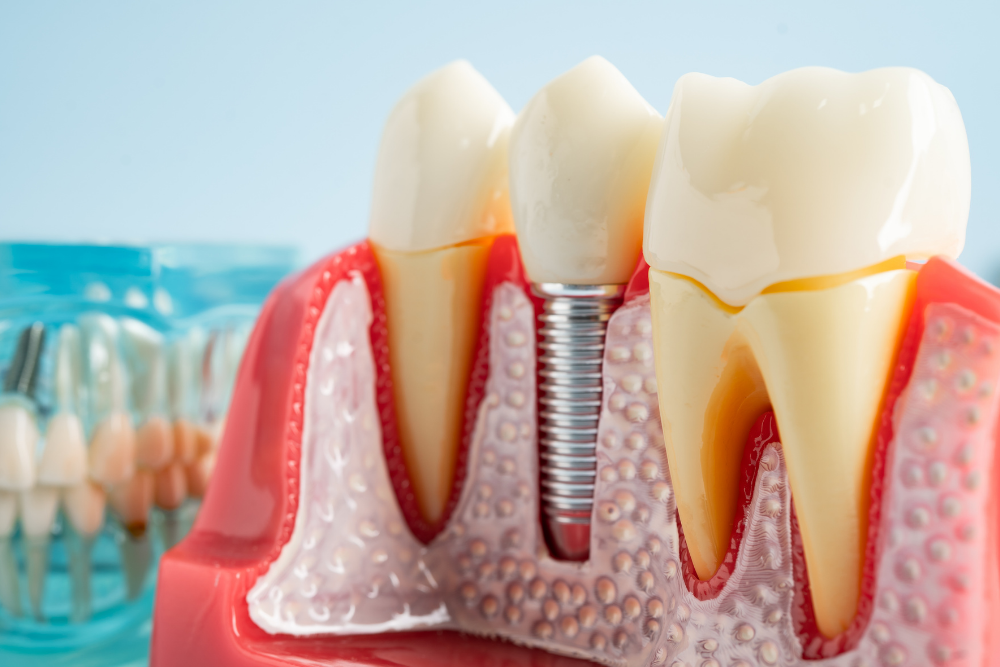
A dental implant is a small titanium post placed into the jawbone where the natural tooth root used to be. Titanium is biocompatible, allowing the surrounding bone to heal closely around the implant and create a stable foundation.
A finished single-tooth implant has three parts:
Implants can also support a bridge for several missing teeth or a full-arch restoration where extensive tooth replacement is needed.
A single dental implant replaces one missing or severely damaged tooth without relying on neighbouring teeth for support. The implant supports a custom-made crown and can be brushed and cared for as part of your normal routine.
This may be suitable when a tooth has been lost through injury, decay, infection or an unsuccessful previous restoration.
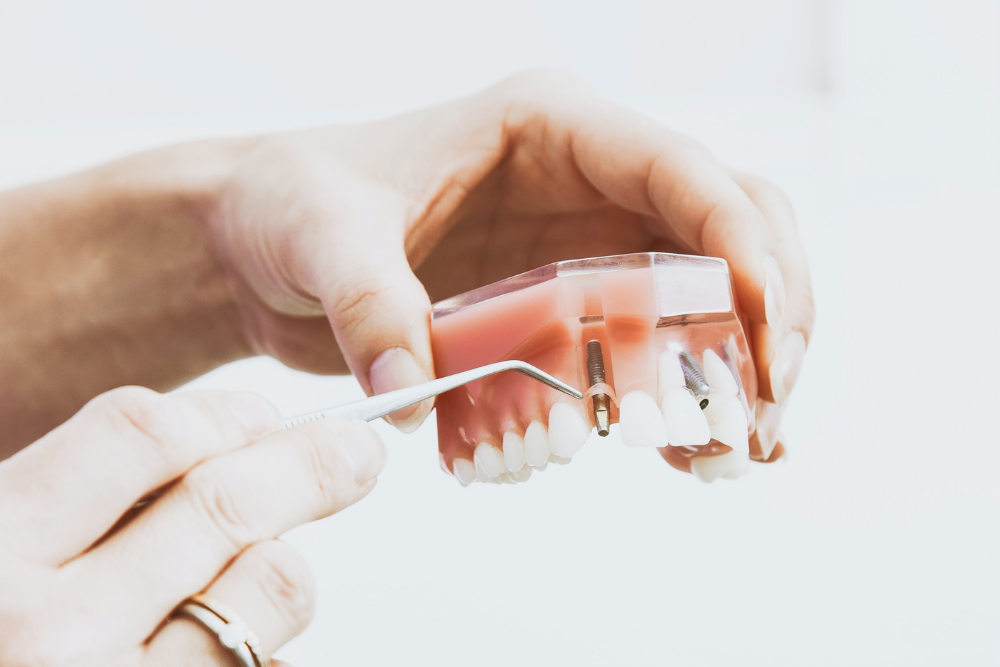
An implant-supported bridge can replace several adjacent missing teeth. Two or more implants support a connected row of replacement teeth, so an individual implant is not always required for every gap.
This provides a fixed alternative to a removable partial denture and may avoid preparing healthy neighbouring teeth to hold a conventional bridge. The number of implants needed depends on the position of the gap, your bite and the available bone.
Where most or all teeth in one jaw are missing or cannot be retained, several implants can support a complete fixed set of teeth. Foxley Lane Dental offers options for full mouth implants including All-on-4, All-on-5 and All-on-6.
As this article focuses on single and multiple teeth, you can read our separate guide to full-mouth dental implants for more detail.
Your first step is a dental implant consultation in Purley. We will discuss the teeth you want to replace, your health and dental history, and what you would like treatment to achieve.
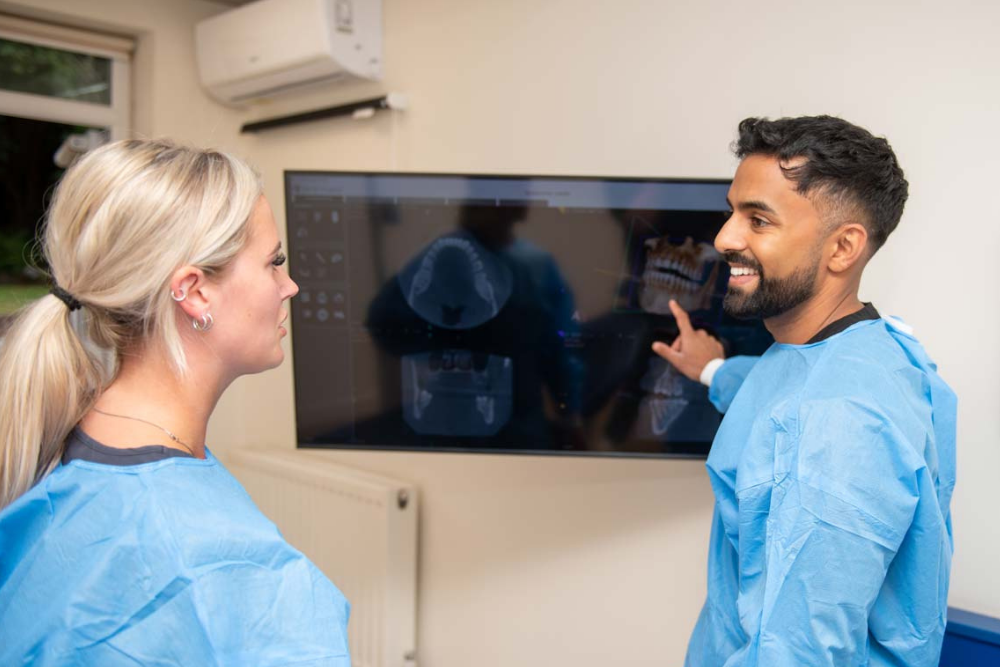
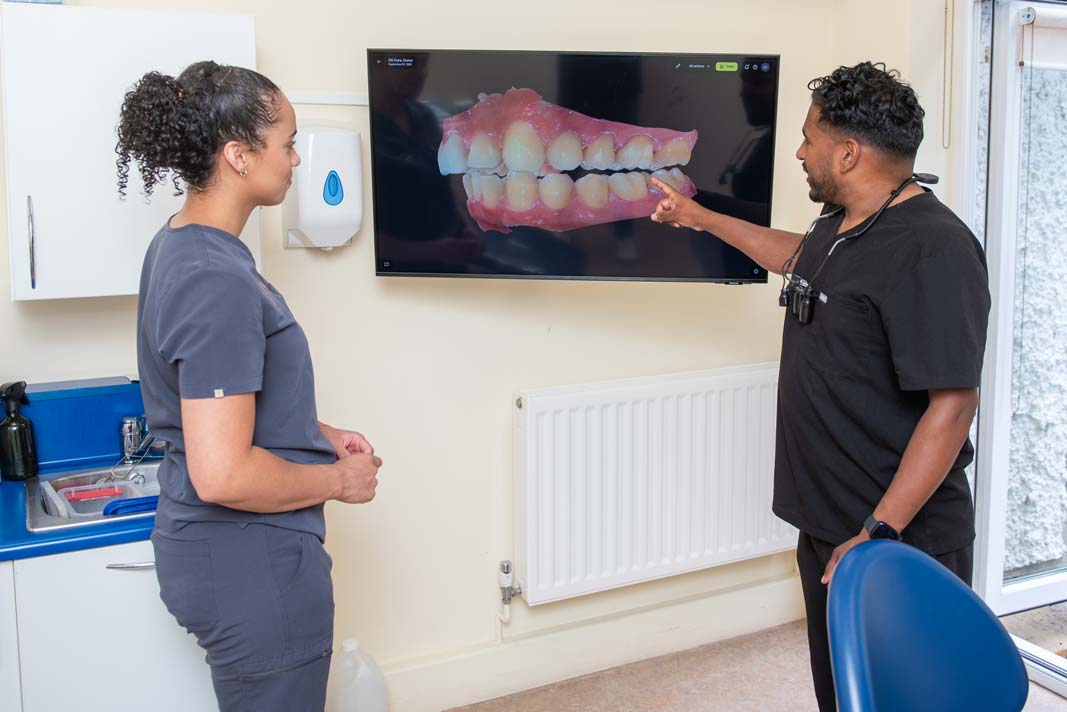
Detailed imaging helps us assess your jawbone, gums and nearby structures. We can then explain whether an implant is suitable and provide a personalised, itemised treatment plan.

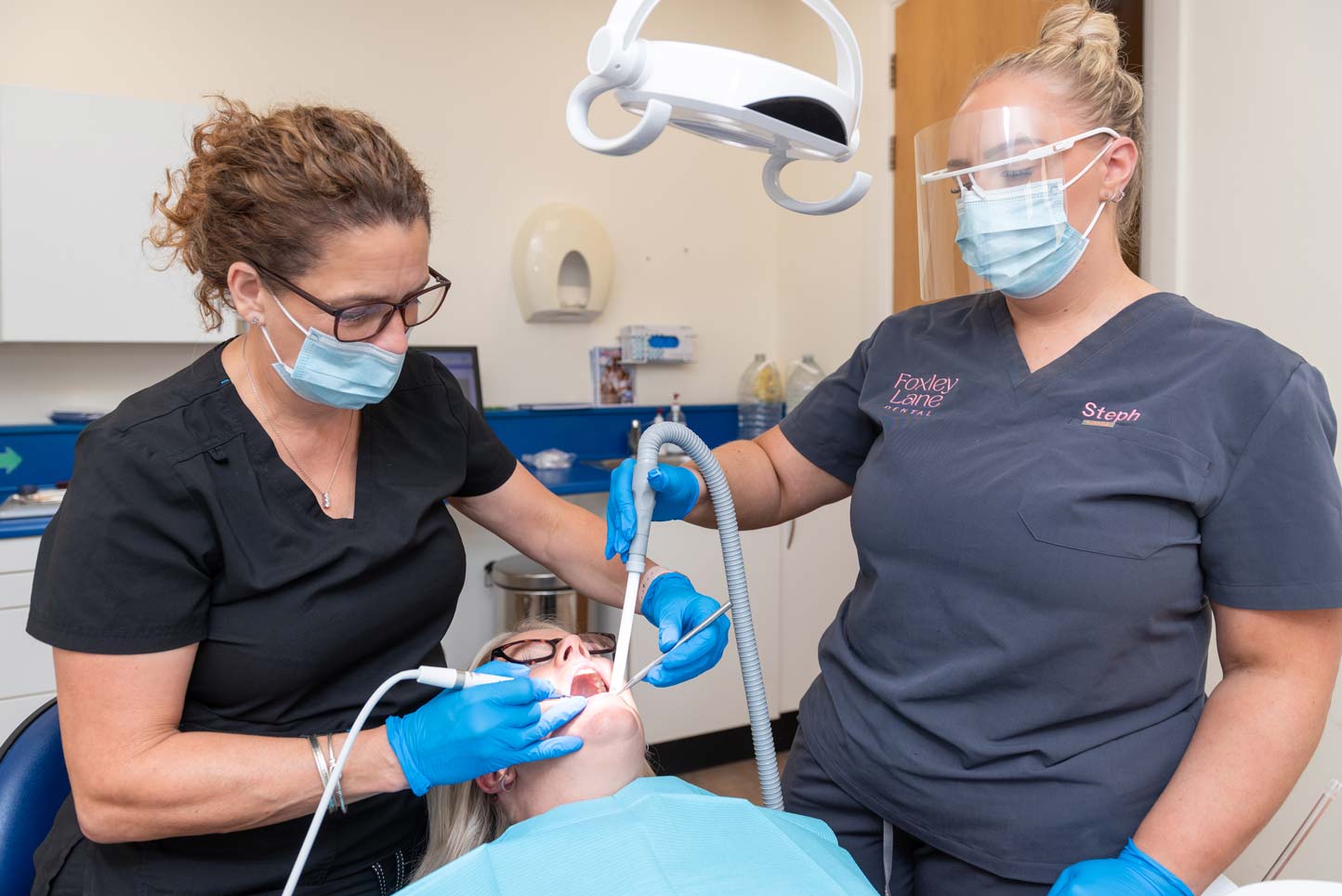
The titanium implant is placed into the jawbone, usually under local anaesthetic. An appointment commonly takes around one to two hours, although this varies with the number of implants and complexity of treatment.
The implant is left to heal securely within the bone through a process called osseointegration. At Foxley Lane Dental, this commonly takes around three months.
Treatment may take longer if a tooth must first be removed, the area needs more healing or bone grafting is required.
Once the implant is stable, the abutment and final crown or bridge are fitted. Your restoration is planned to sit comfortably within your bite and blend with your surrounding teeth.
A straightforward case may progress to the final restoration after around 12 weeks of healing. More complex treatment can take several additional months.
Most adults can be assessed for dental implants, but suitability depends on the health of your mouth and your ability to heal and maintain the implant.
We will consider:
Limited bone does not automatically rule out treatment. Bone grafting may strengthen or rebuild the implant site, while a sinus lift may sometimes be needed at the back of the upper jaw. Your scan will show whether an additional procedure is required and how this would affect your timeline and cost.
Dental implant costs vary because treatment may involve assessment, implant placement, a crown or bridge, an extraction or bone-building procedures.
At Foxley Lane Dental, implant placement is currently from £1,600 and an implant crown from £1,200. This gives a starting total of £2,800 for a straightforward single-tooth implant in Purley. The implant consultation, valued at £200 and including a CT scan, is currently complimentary. Full mouth implants in Purley - often called All-on-4 or ‘same day teeth’ - start from £16,000.
Where required, bone grafting starts from £750 and a sinus lift is listed at £750. You will receive a clear cost breakdown before deciding whether to proceed.
Flexible dental implants finance Purley options are available through Tabeo to help spread the cost into regular payments. Finance is subject to the provider’s terms and approval, and our team can explain the current options during your consultation.
Purley dental implant prices vary between patients because the total cost depends on the number of teeth being replaced, the type of restoration required and whether additional treatment such as an extraction or bone graft is needed.
Your implant consultation allows the dentist to assess your mouth and provide an itemised treatment plan based on your individual dental care needs. The best option depends on the neighbouring teeth, your bone and gum health, budget, timescale and preference for a fixed or removable replacement.
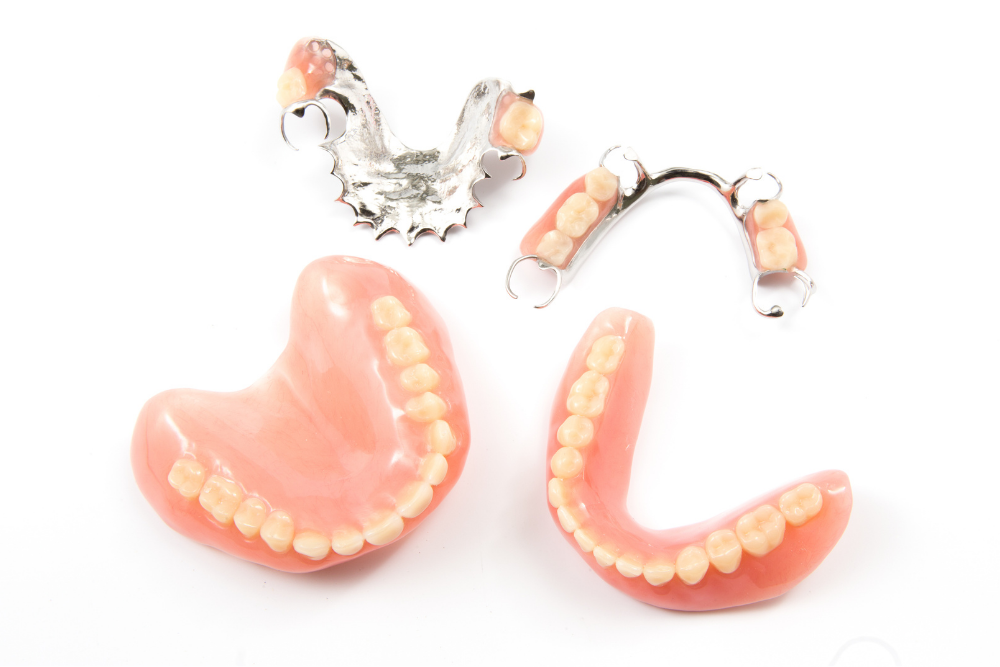
Dentures and conventional dental bridges are usually cheaper alternatives to dental implants in the UK, although they do not replace a missing tooth in quite the same way.
Dental implants replace both the visible tooth and its root, whereas a bridge relies on neighbouring teeth for support and a denture is removable. The most suitable option will depend on how many teeth are missing, the condition of the surrounding teeth and gums, your budget and whether you would prefer a fixed or removable replacement.
We completely appreciate that dental implants are a significant investment. At Foxley Lane Dental, we offer the option to spread the cost of treatment through quick, flexible payment plans provided by Tabeo.
We want patients across Purley and the surrounding community to be able to access appropriate dental care, so your dentist will talk you through the available options, costs and clinical differences before you make a decision.
Dental implants are designed as a long-term tooth replacement and tend to last a long time when well planned and maintained, but no dental treatment can be guaranteed for life. The implant post may remain healthy for many years, while the crown or bridge above it can experience wear and may eventually need repair or replacement. Daily brushing and interdental cleaning, regular dental and hygiene visits, healthy gums and avoiding smoking all support the best long-term outcome.
The right tooth replacement should suit your mouth, goals and everyday life. At Foxley Lane Dental, our dental implant expert will explain the options, answer your questions and create a treatment plan based on what is clinically appropriate for you - with finance options to help.
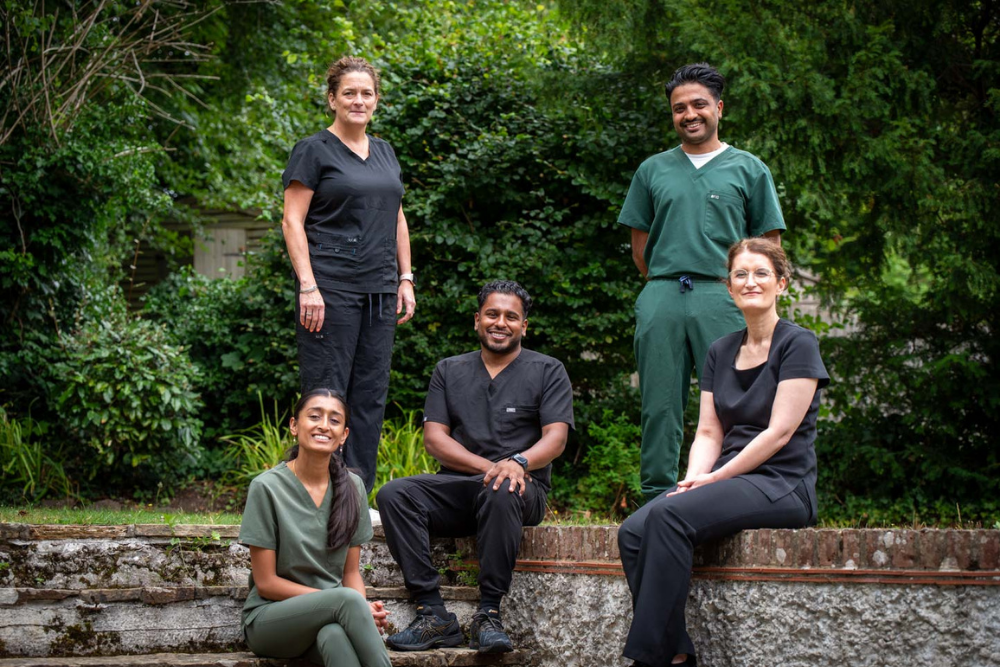
Book your complimentary implant consultation at Foxley Lane Dental in Purley to explore a single implant, an implant-supported bridge or another suitable option for replacing missing teeth.

An implant-supported bridge can replace several adjacent missing teeth using fewer implants than the number of teeth being restored. Your dentist will assess the gap, your bite and available bone before recommending the most suitable option. For some patients, this provides a fixed tooth replacement Purley alternative to removable dentures, with the final teeth planned to support comfortable function and a natural appearance.
A dental implant can sometimes be placed during the same appointment as a tooth extraction, but immediate placement is not suitable for everyone. The socket needs suitable bone, healthy surrounding tissue and enough stability to support the implant. Your dentist in Purley will explain whether immediate placement or a period of healing is more appropriate for your dental care.
Patients will not necessarily have to live with a visible gap while a dental implant heals, as a temporary tooth may sometimes be provided. The right option depends on the position of the gap, the condition of the tissues and whether pressure must be kept away from the implant. Your dentist will explain how to protect the area and continue your usual dental care during healing.
Dental implants cannot develop cavities because the implant and crown are made from artificial materials rather than natural tooth tissue. However, plaque can still inflame the gums and affect the supporting bone. Patients therefore still need daily brushing, interdental cleaning and routine dental care, just as they would with natural teeth, bridges or dentures.
Patients with gum disease should have the condition assessed and controlled before dental implants are placed. Active gum disease can affect the tissues and bone needed to support an implant, so treating it first is an important part of safe care. A dental check and ongoing hygiene support may form part of the wider dental services recommended by the dental practice.
Smokers may still be considered for dental implants, but smoking can slow healing and increase the risk of inflammation, bone loss and implant complications. Your dentist will discuss these risks honestly and may advise stopping before and after treatment. Good home care and regular professional dental care are especially important for patients who smoke.
Patients who grind or clench their teeth may still be suitable for dental implants, but the additional pressure must be considered during planning. Your dentist may review your bite and recommend a protective night guard after treatment. This can help protect the implant crown, nearby teeth and any existing dentures while supporting long-term care.
If an implant does not integrate securely with the bone, the clinic will assess why it has remained unstable and explain the available next steps. The implant may need to be removed so the area can heal. Depending on the remaining bone and gum health, another implant, bone grafting, a bridge or dentures may later be considered.
An implant-supported bridge should be cleaned underneath every day using the method recommended by your dentist or hygienist. Implant floss, interdental brushes or other aids may be suggested depending on the bridge design. Regular dentistry appointments allow the clinic to review the gums, implant stability and areas that are difficult to reach at home.
Choose a clinic for dental implant treatment by looking at the clinician’s experience, the assessment process, the clarity of the treatment plan and the aftercare provided. Reviews can offer useful insight, but they should sit alongside a proper consultation and a clear explanation of costs, alternatives and risks. A dental clinic offering both implant treatment and general dentistry can help patients maintain their wider oral health, while cosmetic dentistry planning can help the replacement tooth blend with the smile. The final cosmetic result should still be based on healthy, functional dentistry.

For composite bonding, dental implants, veneers, teeth straightening and teeth whitening:

For children's appointments, dental check-ups, dental hygiene and emergency appointments:


I couldn’t have asked for better treatment. Highly recommended. I am a very happy patient!
Bridget butcher

Excellent care and attention with very experienced dentists and efficient reception with all the latest modern equipment one would hope for. Highly recommend.
anthony carter-clout






Monday
8.30am - 5.00pm
Tuesday
8.30am - 5.00pm
Wednesday
8.30am - 8.00pm
Thursday
8.30am - 5.00pm
Friday
8:30am - 4.00pm
Saturday
9.00am - 2.00pm
Sunday
Closed
2026 | This website was last updated on 30/06/2021 at 09:23


